A good puzzle move does more than score points now: it leaves a useful position for the next turn. These guides explain the core rules, give a concrete example, and highlight a common mistake. Game-specific menus and optional modes may use additional rules.
2048: protect your empty spaces
Each directional move slides the whole board. Equal tiles that meet combine into a tile worth twice as much: two 8 tiles become 16. A new tile appears after a valid move, so a board with no space and no matching neighbors leaves you stuck.
- Build toward a corner. Keep your highest tile near a chosen corner and arrange smaller values beside it. This makes the next large merge easier to prepare.
- Look at the whole row. In a row containing 2, 2, 4, and an empty cell, a left move produces 4, 4, and two empty cells before a new tile appears. It does not immediately produce 8: the newly merged tile waits until a later move.
- Preserve options. When choosing between equal-scoring moves, prefer the one that leaves more empty cells and adjacent matching values.
Common mistake: chasing one small merge that pulls the largest tile out of its corner. Check what your next move would be before committing.
Play 2048 Remastered
Ball sorting: an empty tube is a tool
The goal is to separate mixed colors into matching groups. In the usual ball-sort rules, you move the top ball into an empty tube or onto a ball of the same color, as long as there is room. Check the game's instructions for variations.
- Inspect what is underneath. Moving a red ball may expose the blue ball you need elsewhere. Judge a move by both the destination and the newly exposed color.
- Keep a working space. Filling the final empty tube too early can prevent you from reaching buried balls.
- Example. If a red ball sits above a blue one and another tube has red on top with a free slot, moving red there may expose blue without using the empty tube.
Common mistake: collecting a color wherever possible without checking whether that move traps another color. Work backward from the group you want to finish.
Play Ball Sort Master
Sudoku: eliminate before guessing
In a standard 9-by-9 Sudoku, every row, column, and 3-by-3 box must contain the digits 1 through 9 exactly once. A value that fits its row can still be wrong because of its column or box.
- Start with crowded areas. A nearly complete row or box offers fewer candidates to inspect.
- Find a single candidate. If a row is missing 2 and 7, and an empty cell's column already contains 7, that cell must be 2, provided its box also permits 2.
- Search for a single location. Even if a cell has several candidates, a digit may have only one possible location in a whole box.
Common mistake: entering a plausible number as if it were proven. If you cannot explain why a number is forced, leave it undecided and inspect a different area.
Play Sudoku
Shikaku: turn clues into areas
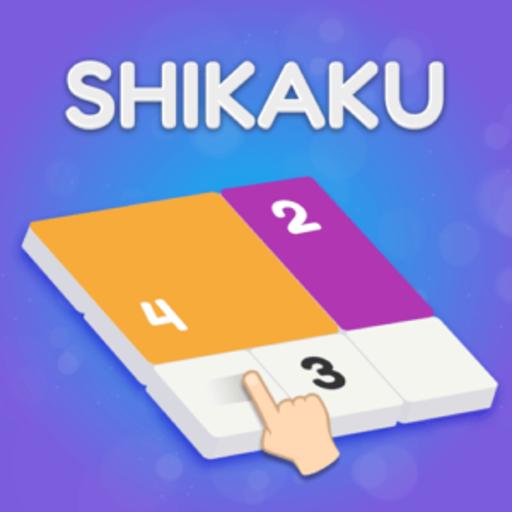
Divide the grid into rectangles. Each rectangle contains exactly one numbered clue, and its area equals that number. Rectangles cannot overlap, and the completed solution covers the entire grid.
- List the shapes. A clue of 6 can belong to a 1-by-6, 2-by-3, 3-by-2, or 6-by-1 rectangle, if the board has room.
- Use the edges. A clue near a corner often has fewer possible placements. Rule out shapes that cross the boundary or include another clue.
- Check leftover cells. A rectangle can satisfy its own number but leave an isolated cell that no remaining clue can cover. Consider neighboring regions before fixing it.
Common mistake: treating the number as a side length. It describes the rectangle's total cell count. A 2-by-3 rectangle contains six cells, not five.
Play Shikaku
Memory Match: give each card a location
Reveal cards to find identical pairs. A mismatch still provides information: remember both the picture and where it appeared. The goal is to use earlier observations rather than repeatedly starting from scratch.
- Use a consistent scan. Explore from left to right or row by row. A predictable route makes card positions easier to remember.
- Name the location. Think “star, top-left” instead of only “star.” This connects the image to an actionable position.
- Use known matches. If a revealed card matches one you remember, select that location before exploring another unknown card.
Common mistake: clicking too quickly to register a mismatch. Pause long enough to learn from each reveal; a slightly slower turn can save several later guesses.
Play Memory Match
Klondike: uncover hidden cards
Build tableau columns downward in alternating colors, and build each suit's foundation upward from Ace to King. A red 7 can sit on a black 8. In standard Klondike, an empty tableau column accepts a King or a sequence beginning with one.
- Reveal information. Favor moves that expose a face-down card when the alternatives offer no clear advantage.
- Plan an empty column. Before clearing a column, identify the King or King-led sequence you can move there.
- Do not rush every foundation move. A low card may still help you move an opposite-color card in the tableau. Check those possibilities before removing it.
Common mistake: assuming every deal is solvable. Draw rules and the initial layout affect the available choices; a blocked deal is not necessarily a missed move.
Play Solitaire Klondike